
Last Updated: October 23, 2026
Quick Summary
To buy handcrafted organic skincare online, check the full ingredient list and returns policy before ordering, and buy from a maker who answers questions directly. At OmMade Organic Skincare we have made small-batch products in Adelaide, SA since 2013, backed by a 30-day money back guarantee.
At OmMade Organic Skincare-
- Every single ingredient is listed. Not just active ingredients, or ingredients above a certain percentage. EVERY SINGLE INGREDIENT.
- You can start with just two products. Keep it simple! Cleanse (either Foaming HOney Cleanser or oil cleanser) and moisturise (Either Hemp Seed Face Serum, Hemp Seed Face Moisturiser or Kakadu Plum Face Moisturiser).
- A short ingredient list is harder to fake than a certification badge.
- Screenshot the ingredient list before ordering so you have evidence if it differs.
Table of Contents
- Why Buy Handcrafted Organic Skincare Online in 2026
- How to Choose Organic Skincare Without Getting Fooled
- Organic Skincare Ingredients That Earn Their Place
- Natural Skincare Products for Sensitive Skin: What to Look For
- Natural vs Synthetic Skincare: An Honest Comparison
- What to Check Before You Buy Handcrafted Organic Skincare Online
- Building a Simple Routine with Handcrafted Organic Skincare
- Conclusion
- Frequently Asked Questions
Why Buy Handcrafted Organic Skincare Online in 2026
If you want to buy handcrafted organic skincare online, the appeal is simple: fewer ingredients, made in small batches, and a maker who can tell you exactly what went into the bottle. At OmMade Organic Skincare, we have been making small-batch products in Adelaide since 2013, and we have watched the category grow from a niche to a crowded shelf.
That growth cuts both ways. Global market estimates from Mordor Intelligence's organic skin care market research put the organic skincare segment in the tens of billions of dollars, with steady forecast growth through 2031. More money attracts more labels, and more labels means more marketing copy to see through.
Here is what most guides get wrong: they treat "organic" and "handcrafted" as quality guarantees. Neither word is regulated in the way most shoppers assume. What actually matters is the ingredient list and whether the maker answers a straight question. Below, we show you exactly how to check all three before you spend a cent.
How to Choose Organic Skincare Without Getting Fooled
Choosing organic skincare comes down to reading the label like a sceptic, not a shopper. Marketing copy is written to reassure you; the ingredient list is written to comply with labelling rules. Trust the second one.
Read the Ingredient List Before the Marketing Copy
Ingredients are listed in descending order by weight, so the first five tell you what the product mostly is. If water or a cheap filler leads and the "hero" botanical appears near the bottom, the formula is mostly filler. Look for short lists where every item has a reason to be there.
Check Certifications
A genuine small-batch maker can usually tell you when a batch was made and how long the product stays fresh. Ask directly. Certification logos are worth checking too, since some are paid memberships rather than audited standards.
What most guides miss is that a short ingredient list is harder to fake than a certification badge. Anyone can buy a logo; not everyone can make a stable product from a few ingredients.
Organic Skincare Ingredients That Earn Their Place
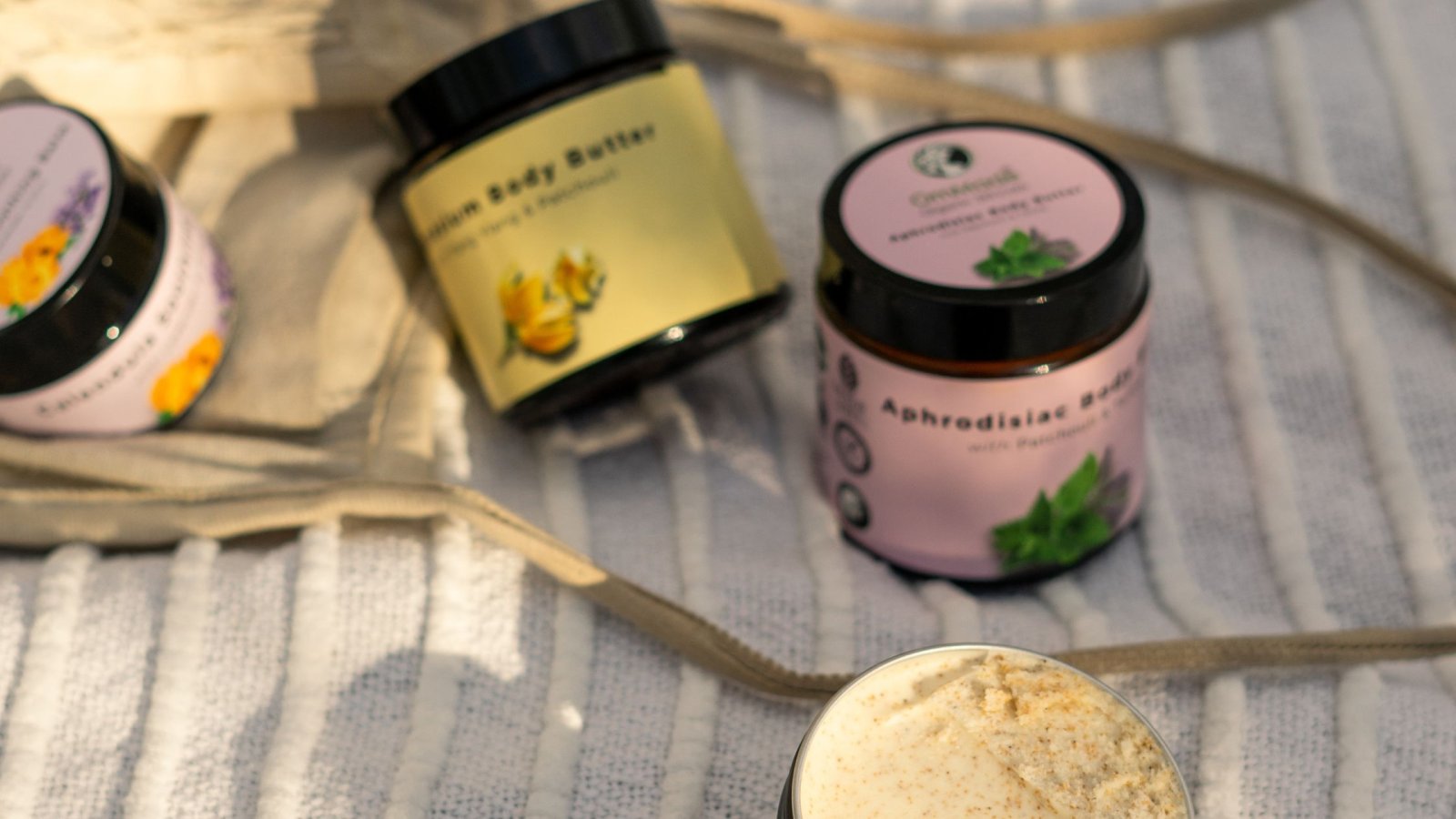
The organic skincare ingredients worth paying for are the ones with a clear job. Hemp seed oil, for example, is a dry oil that hydrates without clogging pores, which is why we use it in our hemp seed face moisturiser alongside red raspberry and Kakadu plum seed oils. Kakadu plum is a native Australian fruit with a high natural vitamin C content, and it appears in our tallow-based moisturiser for the same reason.
Raw honey earns its place in a cleanser because it soothes while it cleans. Castile soap, made from olive oil, lifts dirt without stripping the skin's natural oils.
What does not earn its place: synthetic fragrance, which is a common trigger for reactive skin, and fillers that bulk out a formula without doing anything. If you cannot work out why an ingredient is in the bottle, that is your answer.
Natural Skincare Products for Sensitive Skin: What to Look For
Natural skincare products for sensitive skin should be synthetic fragrance free, short on ingredients, and honest about what they leave out. The Cleveland Clinic's guidance on natural skincare makes an important point that surprises many shoppers: natural products are not automatically gentler, and plant extracts can trigger contact dermatitis just as synthetics can.
So the question is not "natural or synthetic" but "which specific ingredients suit my skin." For reactive skin, we suggest starting with one product at a time, patch testing on the inner arm for a few days, and avoiding anything heavily fragranced. Our Kakadu Plum Face Moisturiser with Tallow & Geranium is built around skin-compatible fats, which makes it a sensible first step for dry or reactive skin. We use essential oils such as geranium for their studies therapeutic benefits, not just to smell nice.
Natural vs Synthetic Skincare: An Honest Comparison
Natural vs synthetic skincare is not a morality contest. Both categories contain good and poor formulations, and the distinction that matters is function, not origin.
Factor |
Natural and handcrafted |
Synthetic and mass-produced |
|---|---|---|
Ingredient list |
Usually shorter, recognisable names |
Often longer, includes preservatives and fragrance |
Batch consistency |
Varies slightly between batches |
Highly standardised |
Shelf life |
Shorter, usually within 6 months of opening. |
Longer due to preservatives, stabilised |
Reaction risk |
Plant allergens still possible |
Fragrance and preservatives are common triggers |
Transparency |
Maker usually reachable directly |
Support often handled by a call centre or AI. |
Synthetics exist for real reasons: stability, shelf life, and consistent texture. Natural formulations demand more care from the maker and the user. Neither is inherently superior, but if transparency is your priority, a small-batch maker is easier to hold to account.
What to Check Before You Buy Handcrafted Organic Skincare Online
Before you buy handcrafted organic skincare online, run through a short checklist. It takes five minutes and saves you from most of the disappointment in this category.
- Full ingredient list published on the product page, not just "key ingredients"
- Batch or made-on date, or a clear answer when you ask
- A returns policy that covers skin reactions, not just unopened bottles
- Clear directions and storage notes, since natural products behave differently in heat
- A real business address and contact method
- Reviews that mention specific skin types, not just star ratings
Our own 30-day money back guarantee exists because we know a formula that suits one person can irritate another. If you are shopping for handcrafted organic skincare in Adelaide, you are also welcome to visit the storefront in OmMade Meet the Maker and ask questions in person before ordering online.
Building a Simple Routine with Handcrafted Organic Skincare
A simple routine beats a complicated one, especially when you are transitioning to handcrafted organic skincare. Start with two steps: cleanse & moisturise. If you like a toner, then by all mean, add a third product.
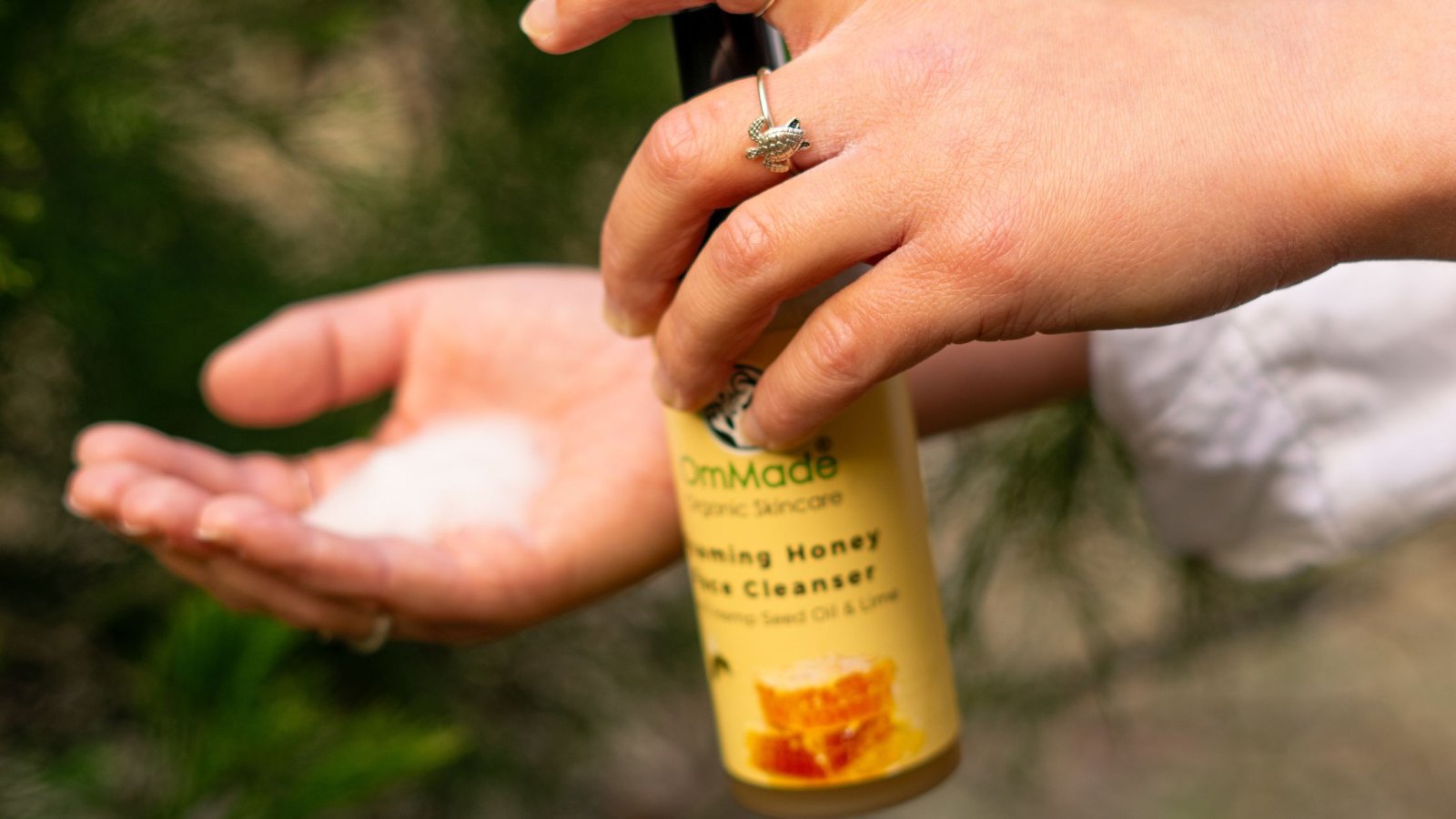
Our Foaming Honey Cleanser handles the first step with raw local honey and organic castile soap, and it suits most skin types. Follow with a moisturiser matched to your skin: the hemp seed formula for normal to acne-prone skin, the tallow and Kakadu plum formula for dry or reactive skin.
You do not need to replace everything at once. Mix and match with what already works for you, and swap in one handcrafted product at a time. Most people notice a difference in how their skin feels within a few weeks.
Conclusion
The hardest part of buying handcrafted organic skincare online is not finding products. It is finding a maker who will show you the ingredient list and stand behind the result if your skin disagrees. That standard is rarer than the marketing suggests.
We built OmMade Organic Skincare around it: naturopath formulated, made in small batches, certified palm oil free, and free from fillers and synthetic fragrances. Every order is covered by our 30-day money back guarantee, so a product that does not suit your skin is not a loss.
Ready to start with one product rather than a whole routine? Shop All and begin with the cleanser.
Frequently Asked Questions
What should I look for when buying organic skincare online?
Start with the full ingredient list, not the front label. Look for named plant oils, butters and extracts rather than vague terms like 'botanical blend'. Check where the brand makes the product, and whether it lists preservatives and fragrance clearly. Look for a clear returns policy, because you cannot smell or patch-test a product before it arrives. Finally, check that the product page tells you who formulated it and what skin types it suits. A brand that answers those questions plainly is usually the one worth your money.
How can I tell whether skincare is genuinely organic?
Genuine organic claims are specific. Look for the word 'organic' attached to individual ingredients, such as organic castile soap or organic shea butter, rather than a single organic logo on the box. In Australia, organic certification is run by private bodies, so a brand should be able to tell you which certifier it uses and which products are covered. If a page says 'organic' but the ingredient list is mostly water, fillers and synthetic fragrance, the claim is doing more work than the formula. Ask the brand directly and see how clearly they answer.
Are handcrafted skincare products better for sensitive skin?
Handcrafted does not automatically mean gentler, but small-batch products often contain fewer ingredients, which makes it easier to identify what your skin reacts to. Natural skincare products have been found to contain allergens that can cause contact dermatitis, so 'natural' is not a guarantee of safety. For sensitive skin, look for short ingredient lists, no synthetic fragrance, and a patch test before full application. A concentrated tallow or hemp-based moisturiser with a minimal formula is often easier to tolerate than a long synthetic list.

Share:
Moisturiser for Oily Acne-Prone Skin: 2026 Review