A closer look at the skin-supportive compounds inside your moisturiser
When people look at a natural skincare label, they often recognise the ingredients but rarely understand why those ingredients are beneficial for the skin.
Real skincare performance does not come from marketing claims. It comes from the biochemistry of the ingredients themselves, the fatty acids, antioxidants, plant sterols and bioactive compounds that interact with the skin.
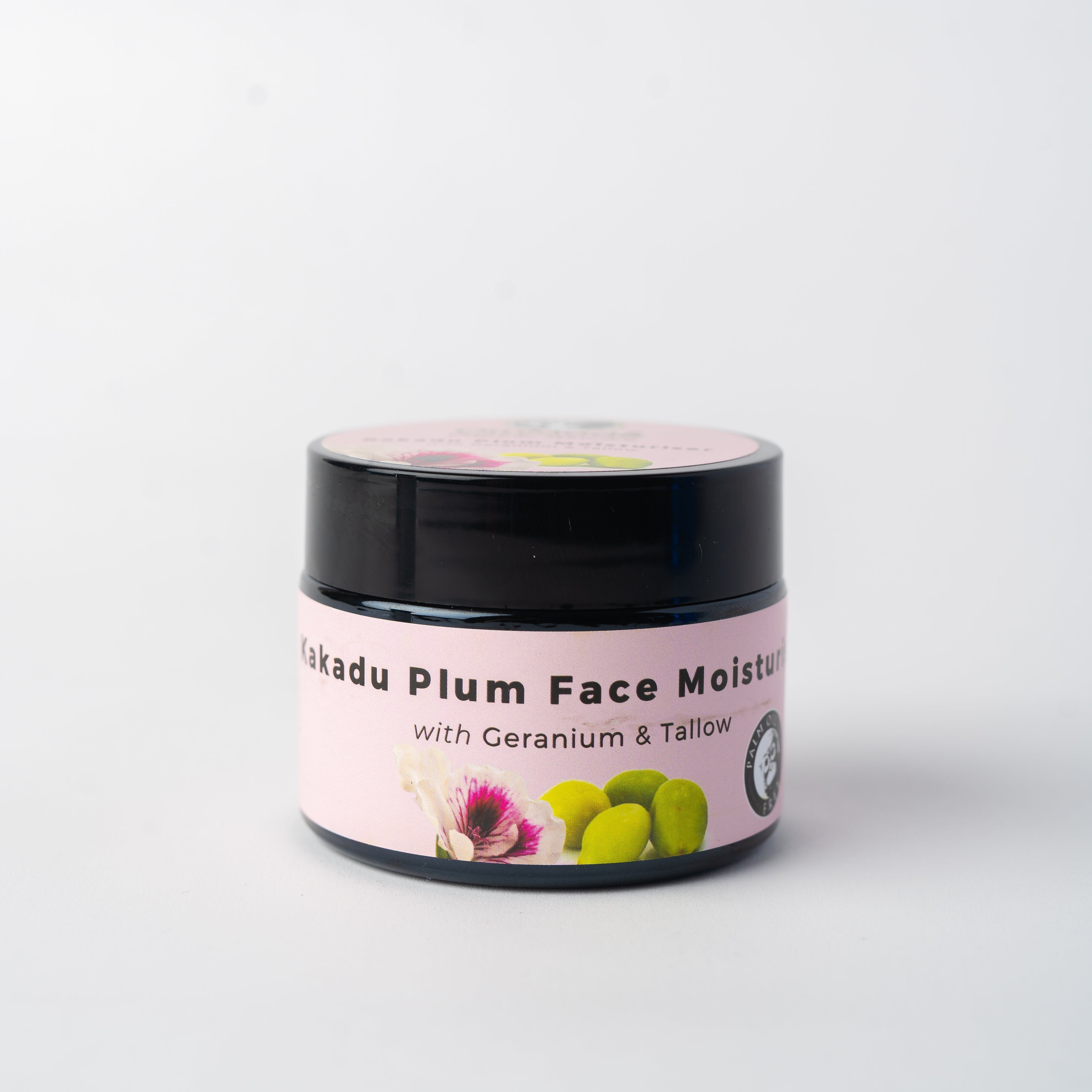
In this article, we will take a deeper look at some of the key ingredients in our Kakadu Plum Face Moisturiser and the specific constituents that make them so supportive for skin health.
Tallow – Skin-Compatible Lipids That Mimic Human Sebum
Tallow has been used in traditional skincare for centuries because its fatty acid profile closely resembles the oils naturally produced by human skin.
This similarity allows the skin to recognise and utilise these lipids efficiently, helping to restore balance and strengthen the skin barrier.
Key constituents found in tallow include:
Oleic Acid (Omega-9)
A deeply moisturising fatty acid that softens the skin and enhances the absorption of nutrients into the skin.
Palmitic Acid
One of the primary fatty acids naturally present in human sebum. It supports the structure of the skin barrier and helps maintain smooth, resilient skin.
Stearic Acid
A protective fatty acid that strengthens the lipid barrier and helps prevent moisture loss.
Palmitoleic Acid (Omega-7)
Found naturally in youthful skin oils, this fatty acid supports skin regeneration and elasticity.
Conjugated Linoleic Acid (CLA)
A naturally occurring fatty acid known for anti-inflammatory properties that help calm irritated skin.
Tallow also provides fat-soluble vitamins including vitamins A, D, E and K, nutrients that support skin renewal, antioxidant protection and overall skin resilience.
Because of this unique compatibility with human skin, tallow is often described as nature’s original moisturiser.
Shea Butter – The Bioactive Fraction That Supports Skin Repair
Shea butter is far more than a simple emollient. It contains a unique fraction known as unsaponifiables, bioactive compounds that remain after the fat is processed and are responsible for many of its skin benefits.
Key constituents include:
Oleic Acid (Omega-9)
Provides deep moisturisation and improves the absorption of other beneficial compounds.
Stearic Acid
Strengthens the skin barrier and helps lock moisture into the skin.
Linoleic Acid (Omega-6)
An essential fatty acid that supports skin barrier repair and helps calm inflammation.
Triterpenes
Plant compounds known for their soothing and anti-inflammatory effects on the skin.
Tocopherols (Vitamin E)
Powerful antioxidants that help protect skin from oxidative stress and environmental damage.
Phytosterols
Plant sterols that support skin repair and help improve elasticity.
Together, these compounds make shea butter particularly valuable for dry, sensitive and mature skin.
Red Raspberry Seed Oil – A Powerful Antioxidant Oil
Red raspberry seed oil is rich in essential fatty acids and plant antioxidants that help protect the skin from environmental stress.
Key constituents include:
Linoleic Acid (Omega-6)
Supports repair of the skin barrier and helps reduce moisture loss.
Alpha-Linolenic Acid (Omega-3)
An anti-inflammatory fatty acid that helps calm redness and irritation.
Oleic Acid (Omega-9)
Provides nourishment and improves skin softness.
Tocopherols (Vitamin E Complex)
Powerful antioxidants that help protect skin lipids from oxidative damage.
Carotenoids
Antioxidant pigments that support healthy skin tone and vitality.
Ellagic Acid
A polyphenol known for its ability to help protect collagen and support skin firmness.
These compounds make raspberry seed oil a valuable ingredient for supporting skin resilience and protecting against environmental stressors.
Kakadu Plum Seed Oil – Barrier Support
Kakadu plum is widely known for its extremely high vitamin C content. However, it is important to understand that vitamin C is found in the fruit pulp, not the seed oil.
The seed oil provides a different set of benefits based on its fatty acid and antioxidant profile.
Key constituents include:
Oleic Acid (Omega-9)
Deeply nourishing and helps improve moisture retention.
Linoleic Acid (Omega-6)
Supports skin barrier repair and helps reduce inflammation.
Palmitic Acid
Supports the integrity of the skin barrier and smooth skin texture.
Stearic Acid
Provides protective barrier support and long-lasting hydration.
Phytosterols
Help strengthen the skin barrier and support elasticity.
Tocopherols (Vitamin E)
Antioxidants that protect the skin from oxidative stress.
These compounds make Kakadu plum seed oil an excellent barrier-supporting and skin-nourishing oil.
Rose Geranium Essential Oil – Aromatic Compounds That Support Skin Balance
Rose geranium essential oil is valued in skincare not only for its beautiful aroma, but also for the plant compounds it contains.
Key constituents include:
Citronellol
A soothing aromatic compound that helps calm the skin.
Geraniol
An antioxidant compound that supports skin vitality and tone.
Linalool
A gentle terpene known for calming and anti-inflammatory properties.
Citral
Contributes to skin clarity and freshness.
Together, these compounds contribute to the oil’s balancing and toning effects on the skin.
Why Ingredient Constituents Matter
When you understand the actual chemistry of natural ingredients, skincare becomes far more meaningful.
Rather than relying on vague marketing claims, we can look at the specific fatty acids, antioxidants and bioactive compounds that support skin function.
Healthy skin depends on three key factors:
-
A strong lipid barrier
-
Protection from oxidative stress
-
Nourishment from compatible skin lipids
When ingredients provide these elements in their natural form, they work with the skin rather than against it.
This is the philosophy behind traditional skincare formulations that focus on simple, purposeful ingredients with proven skin compatibility.
Share:
Insomnia: Natural Support with Homeopathy and Herbs
Traditional Herbal Cleansing: A Deeper Look at the Ingredients in Banish Brew