When it comes to herbal cleansing, the conversation often focuses on what to take.
Far less attention is given to something just as important, how those herbs have traditionally been used, and why certain combinations exist in the first place.
Across many traditional systems of medicine, from European herbalism to South American and Ayurvedic practices, certain herbs were commonly grouped together in protocols aimed at supporting digestive balance and creating an internal environment less favourable for parasites.
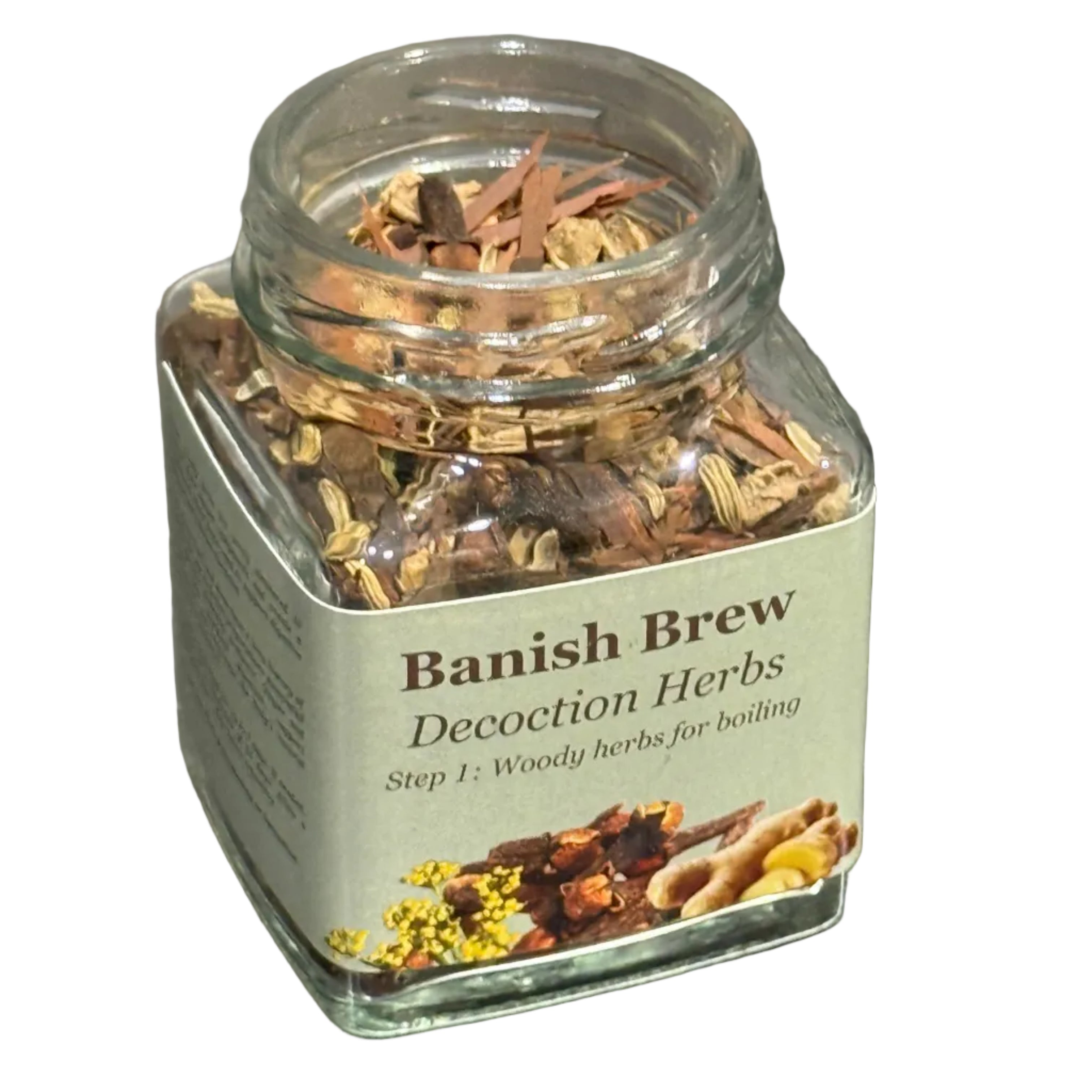
Banish Brew follows this more traditional structure, combining decoction herbs, infusion herbs, and mineral binders. Each plays a different role, and many have a long history of inclusion in herbal preparations associated with anti-parasitic protocols.
Let’s break it down.
Decoction Herbs: Extracting the Deeper Compounds
Decoctions are used for tougher plant materials like bark, roots, and seeds. These require heat and time to release their active compounds.
Pau d’Arco Bark (Tabebuia impetiginosa)
Traditionally used in South American herbal medicine, Pau d’Arco has a long history of inclusion in herbal preparations aimed at supporting microbial balance.
It has also been used in traditional anti-parasitic protocols, where maintaining balance within the digestive system was key. Its naturally occurring compounds, including naphthoquinones, have been studied for their role in microbial environments.
Ginger Root (Zingiber officinale)
Ginger is one of the most widely used digestive herbs globally.
Traditionally, it has been used to:
- Stimulate digestive fire
- Support circulation
- Reduce nausea and discomfort
In anti-parasitic herbal traditions, ginger is often included not for its direct action, but for its ability to enhance digestion and improve the effectiveness and movement of other herbs through the system.
Fennel Seed (Foeniculum vulgare)
Fennel has been used for centuries to support digestion, particularly in reducing bloating and gas.
Traditionally, it is known for:
- Carminative properties
- Supporting smooth muscle relaxation
- Easing digestive discomfort
In cleansing and anti-parasitic blends, fennel helps reduce discomfort that can arise as the digestive system shifts, making protocols more tolerable.
Clove (Syzygium aromaticum)
Clove has a long history of use in traditional herbal preparations, particularly those associated with microbial and parasitic balance.
Traditionally, it has been used to:
- Support digestive health
- Contribute to microbial balance
- Complement other anti-parasitic herbs
In many traditional formulations, clove is included alongside wormwood and other bitters as part of a broader anti-parasitic strategy.
Infusion Herbs: Preserving the Delicate Compounds
Infusions are used for softer plant parts like leaves, where volatile oils play a key role.
Peppermint Leaf (Mentha x piperita)
Peppermint is widely used for digestive support.
Traditionally, it is known for:
- Soothing the digestive tract
- Reducing bloating and discomfort
- Supporting bile flow
In anti-parasitic protocols, peppermint helps ease digestive symptoms and supports overall comfort during the process.
Thyme Leaf (Thymus vulgaris)
Thyme has been used traditionally for both digestive and microbial support.
It is valued for:
- Supporting microbial balance
- Assisting digestion
- Providing aromatic stimulation
Thyme contains compounds such as thymol, which have contributed to its traditional inclusion in cleansing and anti-parasitic herbal blends.
Soursop Leaf (Annona muricata)
Soursop leaf has a long history of use in tropical herbal traditions.
It has been included in herbal preparations to:
- Support digestive balance
- Maintain microbial harmony
- Contribute to cleansing protocols
Its use in anti-parasitic contexts comes primarily from traditional practice rather than modern mainstream herbalism.
Wormwood (Artemisia absinthium)
Wormwood is one of the most recognised traditional anti-parasitic herbs.
Historically, it has been used in:
- Bitter digestive tonics
- Herbal protocols aimed at addressing intestinal parasites
- Preparations designed to stimulate digestive secretions
Its intensely bitter compounds are thought to help create an internal environment less favourable for parasites, while also supporting overall digestive function.
Binding Agents: Supporting Elimination
One of the most overlooked aspects of anti-parasitic protocols is elimination.
Traditional systems often emphasised not just addressing imbalance, but ensuring that what is being cleared is effectively removed from the body.
Bentonite Clay
Bentonite is a naturally occurring clay formed from volcanic ash.
Traditionally, it has been used for:
- Adsorption within the digestive tract
- Supporting elimination pathways
- Gentle cleansing support
In anti-parasitic protocols, it has been used to bind byproducts and support their removal.
Activated Charcoal
Activated charcoal is known for its highly porous structure.
Traditionally, it has been used to:
- Bind unwanted compounds in the digestive system
- Support detoxification processes
- Reduce gas and bloating
Within anti-parasitic approaches, charcoal is often included to help bind and carry out substances released during the process.
Zeolite
Zeolite is a naturally occurring volcanic mineral with a cage-like structure.
Traditionally, it has been used for:
- Binding and trapping compounds
- Supporting elimination
- Complementing other mineral binders
Its porous structure makes it well suited for adsorption in cleansing protocols.
Why Structure Matters
What makes this approach different is not just the ingredients, but the structure.
In traditional anti-parasitic herbal protocols:
- Bitter and antimicrobial herbs are introduced first
- Digestive support herbs help the body process and tolerate the protocol
- Binding agents are used separately to support elimination
This separation allows the body to absorb first, then eliminate, rather than overwhelming the system.
Bringing It All Together
Traditional herbal systems rarely relied on single ingredients.
They worked in layers.
Each herb had a role.
Some supported digestion.
Some were traditionally used in anti-parasitic contexts.
Others supported elimination.
When combined correctly, the result is not just a blend, but a structured system.
Final Thoughts
Looking at herbs through the lens of traditional use gives context.
It shifts the focus away from quick fixes and towards understanding how plants have been used over time, particularly in protocols aimed at supporting digestive balance and managing internal environments associated with parasites.
Because with herbal medicine, it’s not just what you take.
It’s how you use it.
Share:
Understanding the Real Power of Natural Skincare Ingredients
Why We Created OmMade: A Different Approach to Natural Skincare